
Temperature plummets after parts of Sydney hit 35°C
Temperatures in the Sydney basin have reached extremes of warmth for September, before plummeting rapidly as a dry south to southeasterly change swept across the city.
Monday morning's temperatures were remarkably high not just for the time of year, but for the time of day when they occurred before the southerly air mass cooled things down significantly, with several locations in and around the city reaching or topping 35°C.
Unusually hot so early in the day
Some of the warmest readings in the Sydney CBD and suburbs on Monday morning or just after midday included:
- 35.4°C at 12:05 pm at Richmond in outer northwestern Sydney
- 35.0°C at 11:57 am at Penrith in outer western Sydney
- 33.4°C at 10:56 am at Sydney Olympic Park
- 32.7°C at 10:43 am at Observatory Hill, Sydney's official weather station located near the southern pylon of the Sydney Harbour Bridge
It's also worth noting that the mercury reached 28.9°C at 9am at Observatory Hill, which was the city's highest 9 am reading for September in at least 17 years
(Historically speaking, 9 am is an important hour of the Australian meteorological day, as it's one of two benchmark times when data was manually collected in the days before automated weather stations, which means there are many years of records for that exact time.)
Big temperature drops within only a few minutes
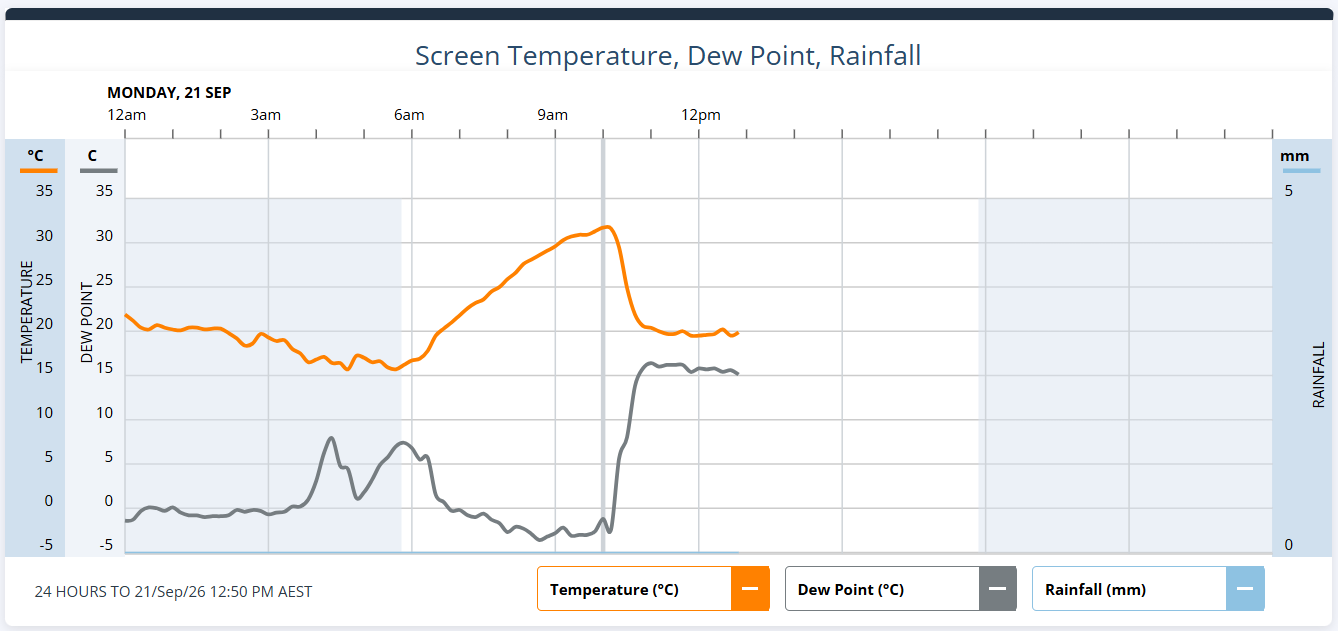
Image: Temperature and dew point observations for Sydney Airport on Monday, September 21, 2026, showing the big fluctuations as the southerly arrived mid-morning. Source: Weatherzone.
As the southerly arrived, there were dramatic temperature fluctuations within a short period in Sydney and its immediate surrounds. For example:
The temperature at Richmond fell more than 10 degrees in under half an hour, dropping from 35.4°C at 12:05 pm to 25.3°C at 12:30 pm.
The mercury at Sydney Airport plummeted almost ten degrees in half an hour, dropping from 31.6°C to 21.9°C between 10:10 am and 10:40 am.
An early-afternoon temperature drop of 11.5 degrees in just 16 minutes (from 35.5°C to 24.0°C) was recorded at Lake Macquarie-Cooranbong, in the Hunter region just north of the Central Coast.
Welcome showers coming later to Sydney region
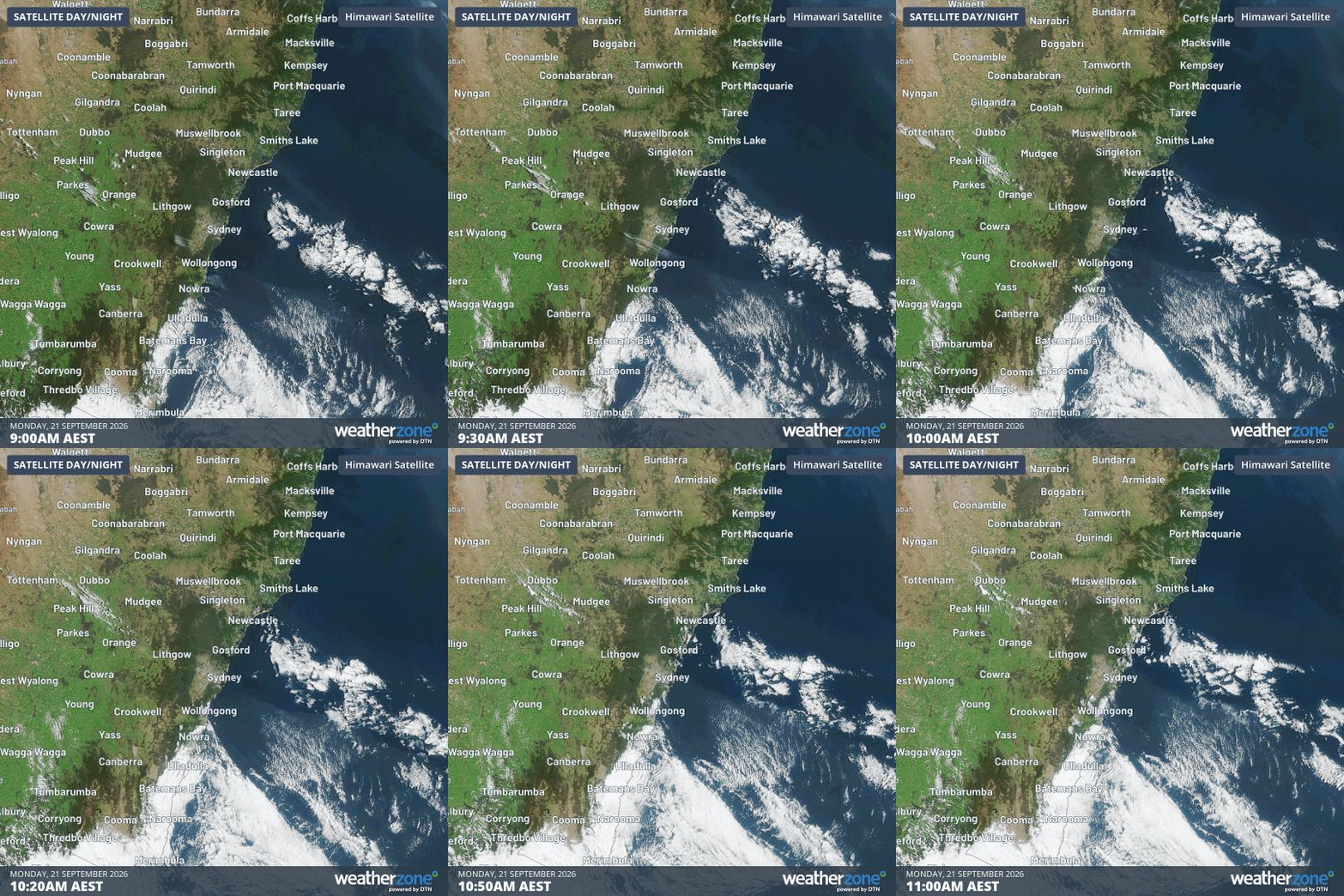
Image: Two-hour satellite loop to 11 am (AEST) on Monday, September 21, 2026 for Sydney and nearby locations. Source: Weatherzone.
Scattered cloud associated with the cool change could be seen pushing northwards towards Sydney on the satellite loop leading up to 11 am (AEST) on Monday morning.
While no rain arrived during the morning with the first surge of the southerly, showers are expected to push in off the coast later in the day, persisting into Tuesday, as a trough forms near the coastline. Afternoon or evening thunderstorms are also possible in Sydney's west.
Any rainfall from this system will be welcomed by most people within the Sydney region, as the city has been relatively dry of late, with below-average rainfall in each month since March.
September has been especially dry. To 9 am this Monday, September 21, just 6.2 mm had been recorded in the city this month, with no recorded rainfall at all in some western suburbs like Penrith.
While September is typically Sydney's driest month, the city still receives 68.3 mm of rainfall on average, which means rainfall is currently tracking at less than 10% of the monthly average – with only nine days remaining in the month.