
Daily thunderstorms across Australia this week
An outbreak of spring thunderstorms will affect Australia this week, causing daily storms in multiple states and territories. Some of these thunderstorms are likely to be severe.
Indian Ocean moisture fuelling Australian storms
Above-average sea surface temperatures to the west and northwest of Australia are enhancing evaporation and causing moisture-laden air to flow towards Australia.
Over the next week or two, this humid tropical air will interact with low pressure troughs and cold fronts to cause a prolonged and widespread outbreak of thunderstorms over Australia.
Rain and storms in multiple states and territories
The majority of this week’s wet and stormy weather will occur over the eastern two-thirds of the country, with Queensland and NSW likely to be active areas for intense storms and heavy rainfall.
The map below shows how much rain is predicted to fall over Australia this week, giving an indication of the areas that could be impacted by showers or thunderstorms.
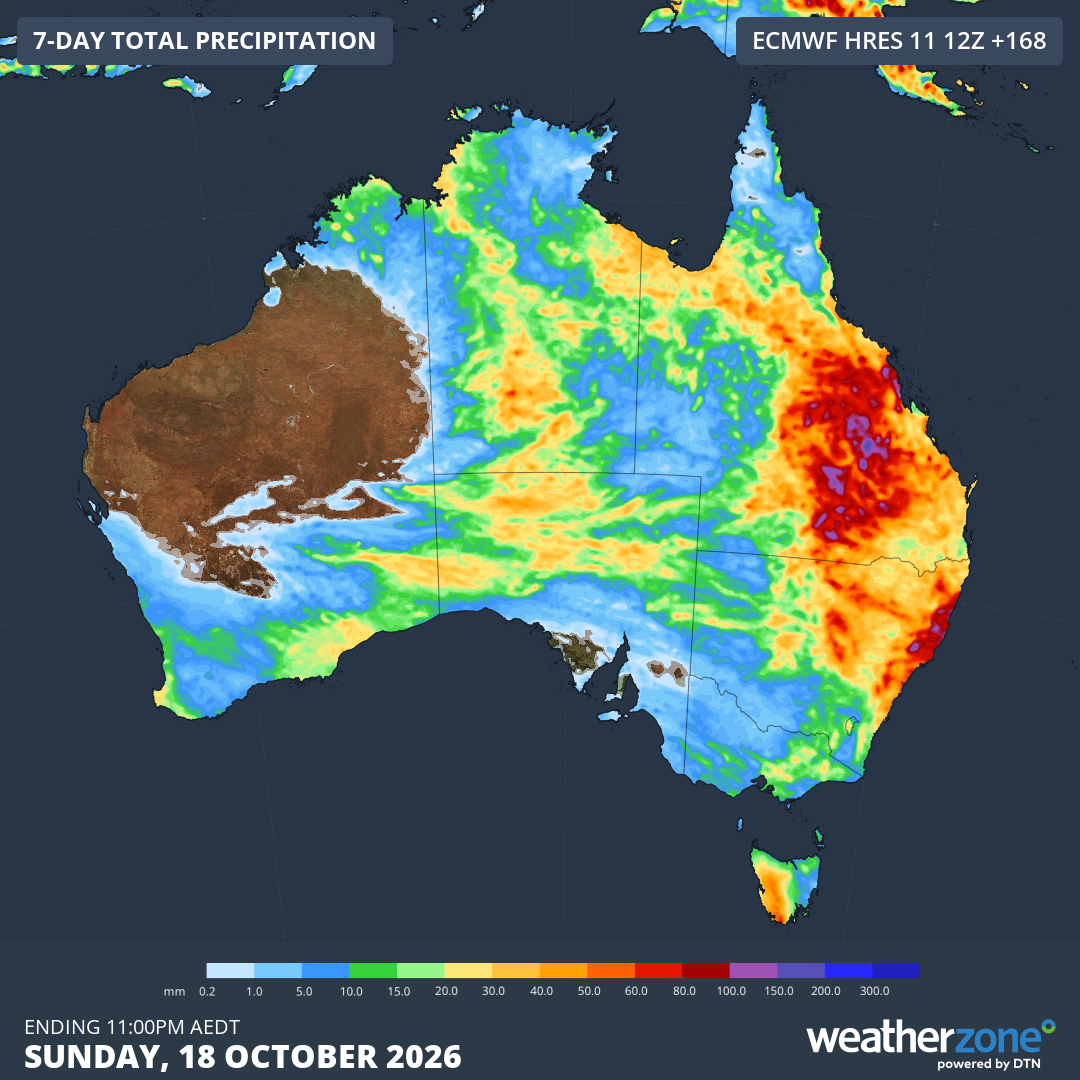
Image: Forecast accumulated rain this week. Source: Weatherzone.
First big week of spring storms for Queensland
While Queensland has already seen some thunderstorm activity this month, this coming week will be the first prolonged period of daily thunderstorm activity affecting a broad area of the state.
Central Queensland will be a focus area for potentially severe thunderstorms this week, with areas of heavy rain likely to occur on multiple days, increasing the risk of flooding.
Southeast Queensland also has a chance of thunderstorms on several days this week. Storms were already developing over southeast Queensland and northeast NSW on Monday afternoon, and further storms are likely in both areas on Tuesday, possibly becoming severe.
How to know when severe storms are coming
All thunderstorms cause lightning, but they are not all severe. In Australia, a severe thunderstorm produces at least one of the following:
- Large hail (at least 2 cm in diameter)
- Damaging winds (gusts reaching 90 km/h or higher)
- Heavy rain that could cause flash flooding
- Tornadoes
The Bureau of Meteorology issues warnings for severe thunderstorms when a severe thunderstorm is occurring or an existing thunderstorm is likely to develop into a severe storm. This warning will include information about the area covered by the warning, the potential weather phenomena associated with the storms, and recommended actions.
Anyone in Australia can access the latest severe thunderstorm warnings through the Bureau of Meteorology’s website. These warnings are also available on the Weatherzone website and app.