
Cold snap wrap: when will SE Australia warm up after freezing weekend?
Temperatures again plunged below zero on Monday morning in Victoria, New South Wales, Tasmania and the ACT after an unseasonably cold November weekend that saw widespread chilly conditions, frosty mornings, and even snowfalls in elevated areas.
Much warmer weather is rapidly approaching, but before the last of the cool air pushes out into the Tasman Sea, here's a summary of some of the weekend extremes.
Coldest weekend temperatures recorded across Australia's southeast (all on Sunday morning)
- VIC -5.9°C at Mt Hotham
- NSW -5.1°C at Perisher
- ACT -4.9°C at Mt Ginini
- TAS -3.9°C at Liawenee
- SA 0.1°C at Naracoorte Aerodrome
Coolest weekend minimums and maximums in the SE capitals (Saturday to Monday morning)
Adelaide: 8.9°C on Saturday morning, 19.3°C on Saturday afternoon (November averages 13.2°C and 24.4°C)
Melbourne: 6.7°C on Monday morning, 15.2°C on Saturday afternoon (November averages 11.3°C and 22.0°C)
Hobart: 6.0°C on Sunday morning, 14.4°C on Sunday afternoon (November averages 9.4°C and 18.8°C)
Canberra: 1.5°C on Sunday morning, 17.2°C on Sunday afternoon (November averages 9.8°C and 24.8°C)
Sydney: 9.6°C on Sunday morning, 19.0°C on Sunday afternoon (November averages 15.7°C and 23.7°C)
Of the above temperature readings, perhaps the most notable was Sydney's minimum on Sunday morning, which was the city's coldest for November in 20 years.
What caused the chilly outbreak and when will warmer conditions return?
An unseasonable cold front surged over southeast Australia during the weekend, bringing an air mass with polar origins that would have been considered cold even if it had arrived in midwinter.
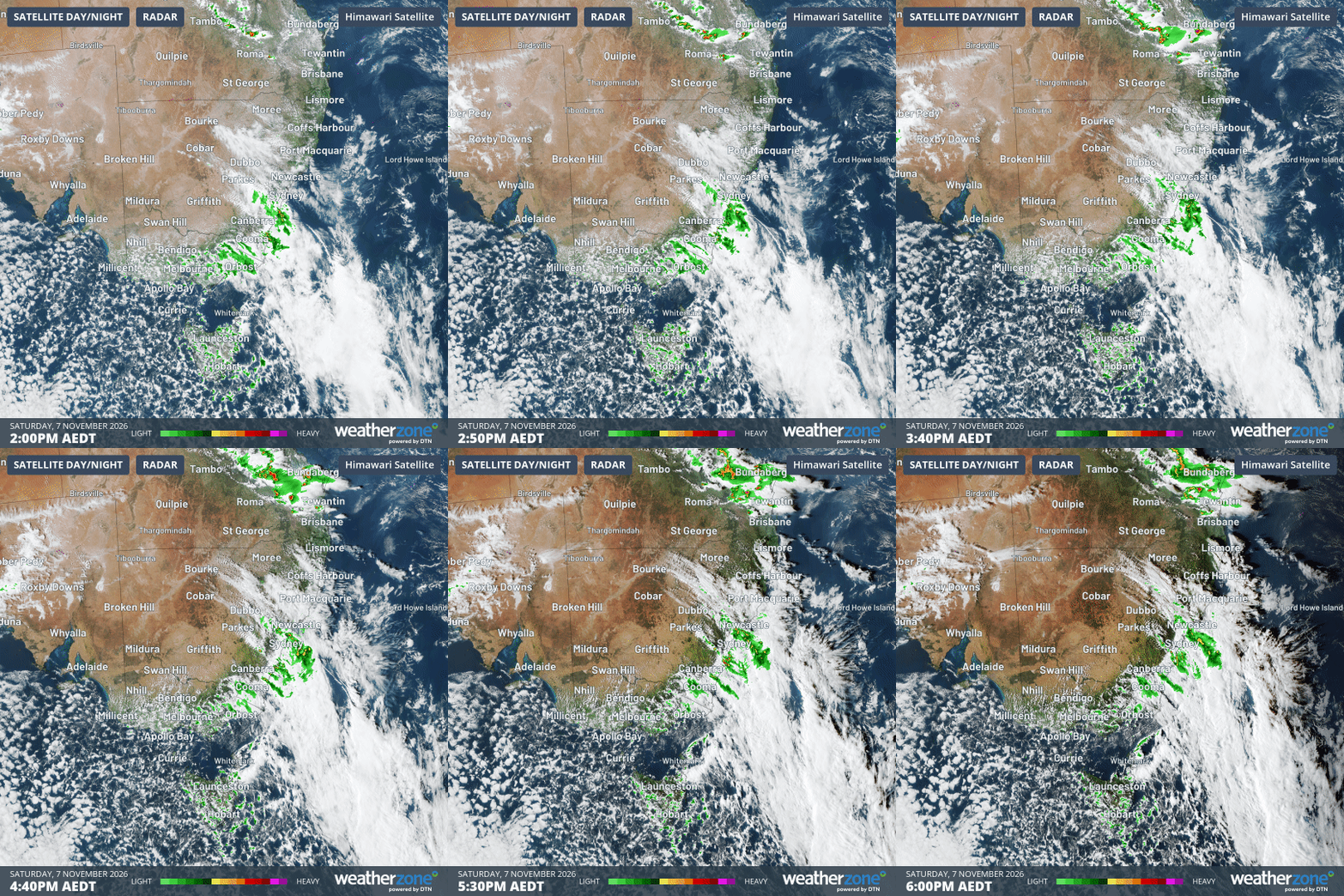
Image: Satellite and radar loop over SE Australia for the four hours to 6 pm (AEDT) on Saturday, November 7, 2026, showing the speckled air mass typically associated with polar outbreaks crossing Tasmania and the southeast. Source: Weatherzone.
The loop above shows the period during Saturday afternoon when heavy snow showers affected the southeastern mainland.
Snowflakes fell down to at least 1000 metres above sea level, with around 3 to 5 centimetres accumulating at higher elevations of the ski areas of New South Wales and Victoria.
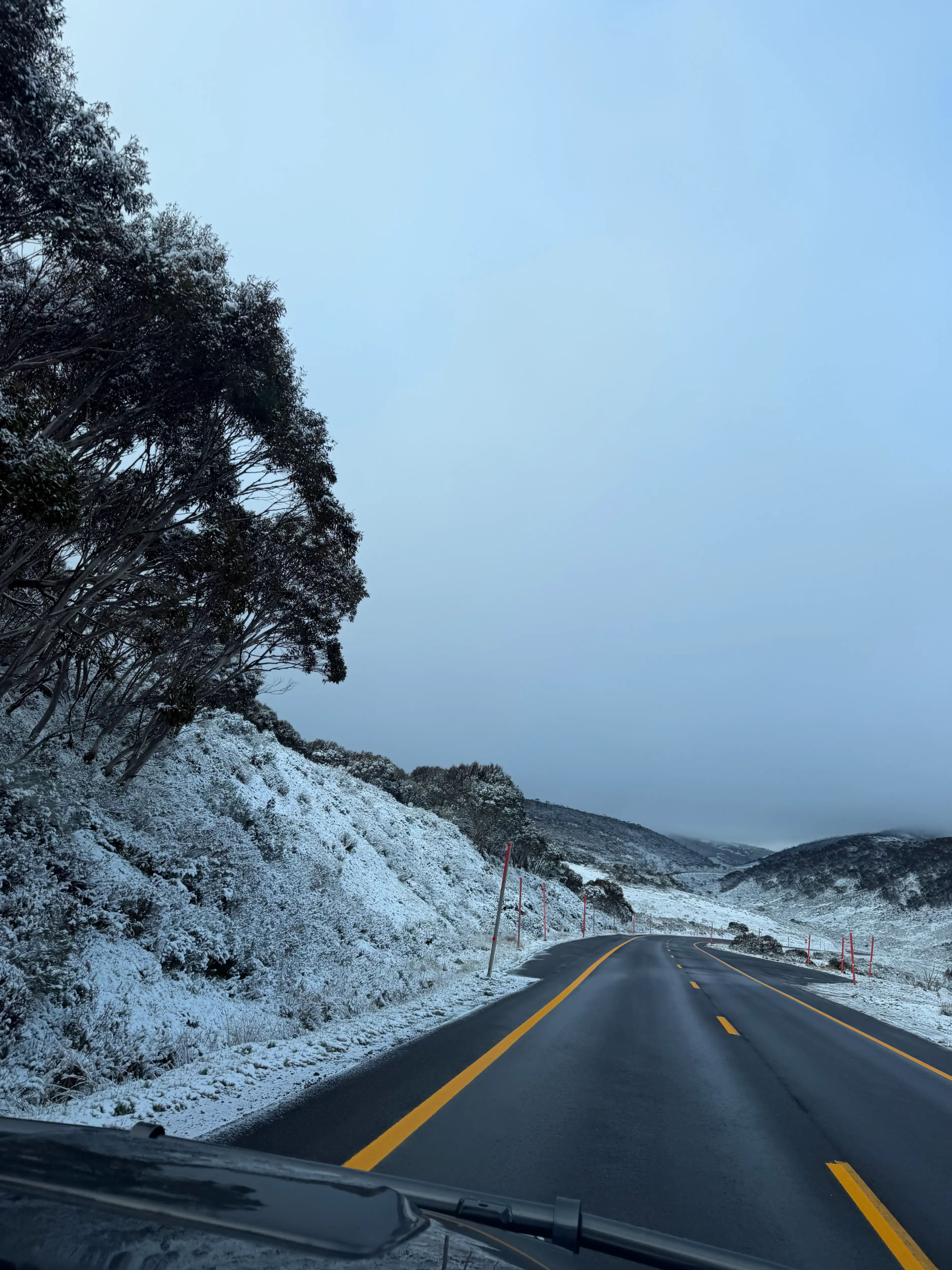
Image: Roadside scene near Perisher, NSW, on Saturday, November 7, 2026. Source: Steve Smith.
Most of the moisture associated with this system then moved rapidly out into the Tasman Sea, although showers and cold conditions persisted along the NSW coastal fringe on Sunday.
It remains relatively chilly for November in Sydney and other parts of the NSW coastline this Monday. Indeed at 11 am, Sydney (17.1°C with a "feels like" temperature of 11.6°C) was marginally colder than Melbourne (17.2°C with a "feels like" reading of 14.5°C).
That's an indication that warmer air is moving in from the west, with Melbourne expecting a maximum of 28°C on Tuesday before an expected high of just 18°C on Wednesday, as the classic spring temperature see-saw dips again.
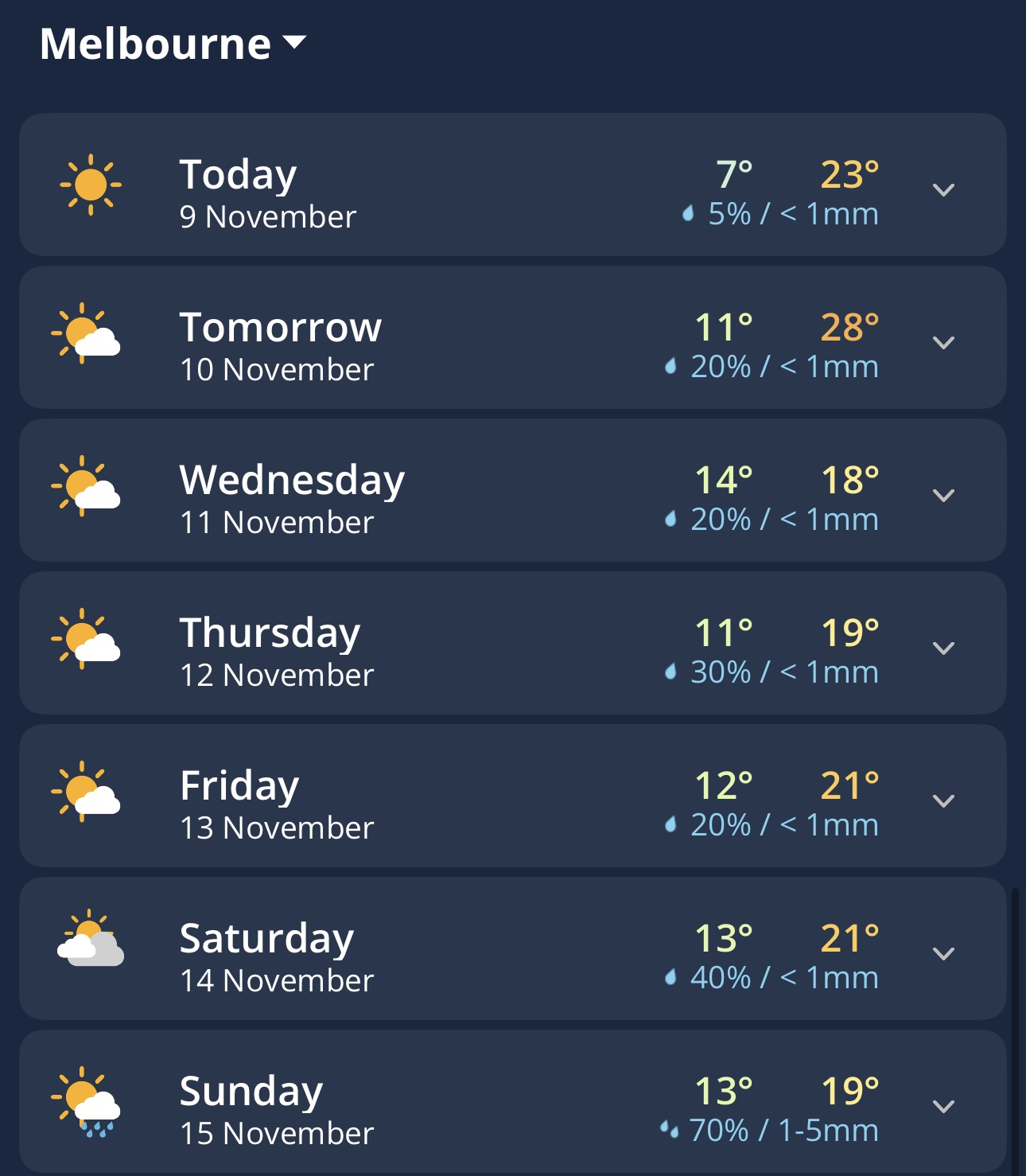
Image: Daily forecast for Melbourne, Vic, on the Weatherzone app.
For Sydney, the working week's warmest day should be Wednesday with a maximum around 27°C, although some outer western suburbs like Penrith are expecting temperatures around 32°C.