
A record breaking hurricane season across the Central and Eastern Pacific Ocean
Fueled by a strong El Niño event and exceptionally warm sea surface temperatures across the tropical central and eastern Pacific, the 2026 Pacific Hurricane Season has been one for the record books.
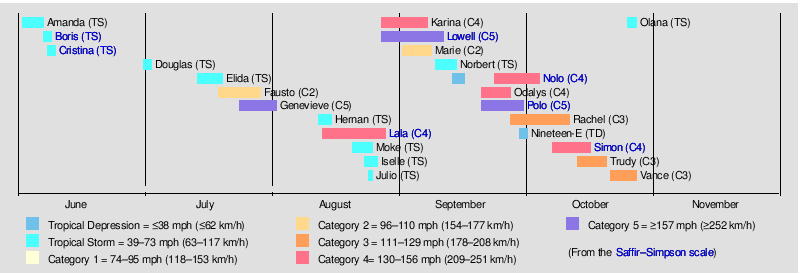
Image: Timeline of tropical storms and hurricanes across the Pacific Ocean from June to November 2026. Source: NOAA/NWS via Wikipedia Commons.
The Pacific Hurricane Season officially began in mid-May, with the first named system, Tropical Storm Amanda, forming on June 2. For the next five months, the season has produced 25 named tropical storms, including 13 hurricanes and a record-equalling 11 major hurricanes.
The season runs until the end of November, with Hurricane Vance the most recent system to impact the Pacific region between October 21 and 29. With just two weeks remaining in the official season, Vance may prove to be the final storm of 2026.
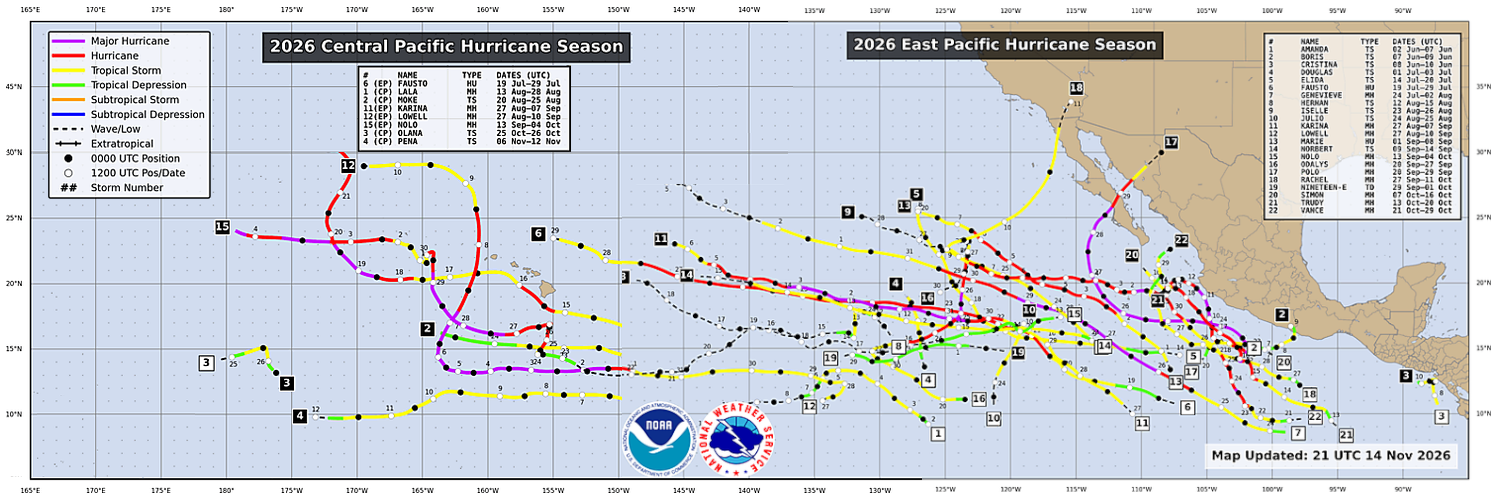
Image: Tropical Storm and Hurricane tracks for the 2026 season. Source NOAA/NWS.
Several records have already been broken or equalled this season.
2026 season statistics (to November 15)
- Named tropical storms: 25 (nine above the 1991–2020 average).
- Hurricanes: 13 (maximum sustained winds exceeding 118 km/h).
- Major hurricanes: 11 (Category 3 or higher, with maximum sustained winds exceeding 178 km/h).
- Accumulated Cyclone Energy (ACE) Index: 359.5 across the Central and Eastern Pacific basins – a new record.
The Accumulated Cyclone Energy (ACE) Index measures the combined intensity and duration of tropical cyclone activity. It is calculated by accumulating the squares of maximum sustained wind speeds (in knots) for tropical systems with winds of at least 63 km/h, at six-hourly intervals.
The 11 major hurricanes equal the previous record set in 2015.
Hurricane Polo – an exceptionally intense system
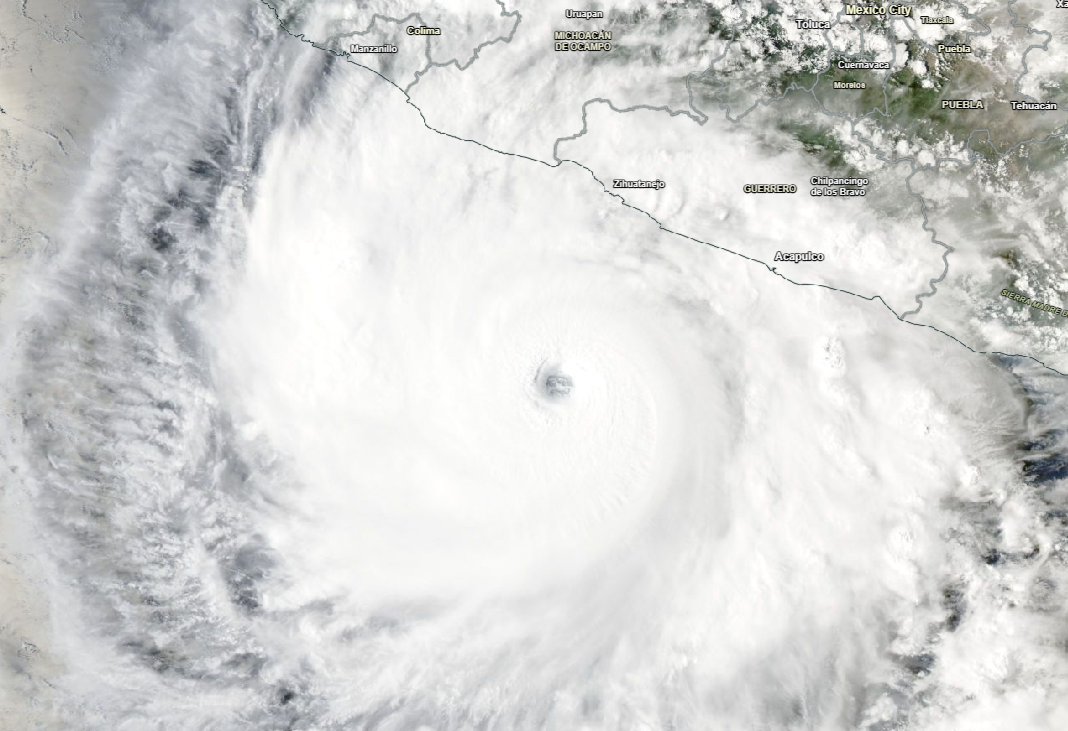
Image: Visible satellite image of Hurricane Polo at peak intensity (Category 5 Hurricane) on 22 September 2026. Source: NASA Worldview.
Tropical Depression 17E formed southwest of the Mexican coast on September 20. The system rapidly intensified under favourable atmospheric conditions and exceptionally warm ocean temperatures, with sea surface temperatures reaching 31°C.
By September 22, Polo had reached Category 1 hurricane intensity, with sustained winds near the centre exceeding 130 km/h. Just one day later, on September 23, Hurricane Polo had intensified into a Category 5 system, reaching its peak intensity.
At its peak, Hurricane Polo recorded a central pressure of 892 hPa, making it the second-most intense hurricane on record across the Pacific Ocean, behind Hurricane Patricia (2015), which reached 872 hPa.
Hurricane Polo also recorded peak sustained winds of 288 km/h, ranking it as the third-strongest Pacific hurricane by wind speed, behind Hurricane Patricia (2015) at 346 km/h and Hurricane Linda (1997) at 298 km/h.