Nachrichten
Startseite>Wetterbericht>Raining iguanas as wintry weather hits eastern US
Raining iguanas as wintry weather hits eastern US
The Eastern US is currently gripped by its coldest weather of the fall so far. The chill will reach all the way south into Florida, where overnight temperatures in the north could plunge to the upper 20s early on Tuesday, with the central parts of the state in the 30s, and the south in the mid to upper 40s. This may have startling consequences: while autumnal leaves are dropping, Floridians might also need to dodge falling reptiles.
Snow and record lows
The first lake-effect snow of the season has developed south and southeast of the Great Lakes, some of it rather heavy, while a number of locations in the Southeast could see record cold temperatures this week.
A strong upper high pressure ridge across the West and the Canadian Prairies is the culprit, forcing a large mass of cold air to plunge southward across the Eastern US over the next few days. This surge of cold air will cause snow over parts of the East and Northeast between Monday and Wednesday, possibly delivering accumulations of 6 to12 inches in parts of eastern and central West Virginia.
The central Appalachians will struggle to rise above freezing for a couple of days, while sub-freezing temperatures will extend right into the South. Many areas from the southern Plains through the South and into the Southeast and Mid-Atlantic are subject to Freeze Watches and Warnings.
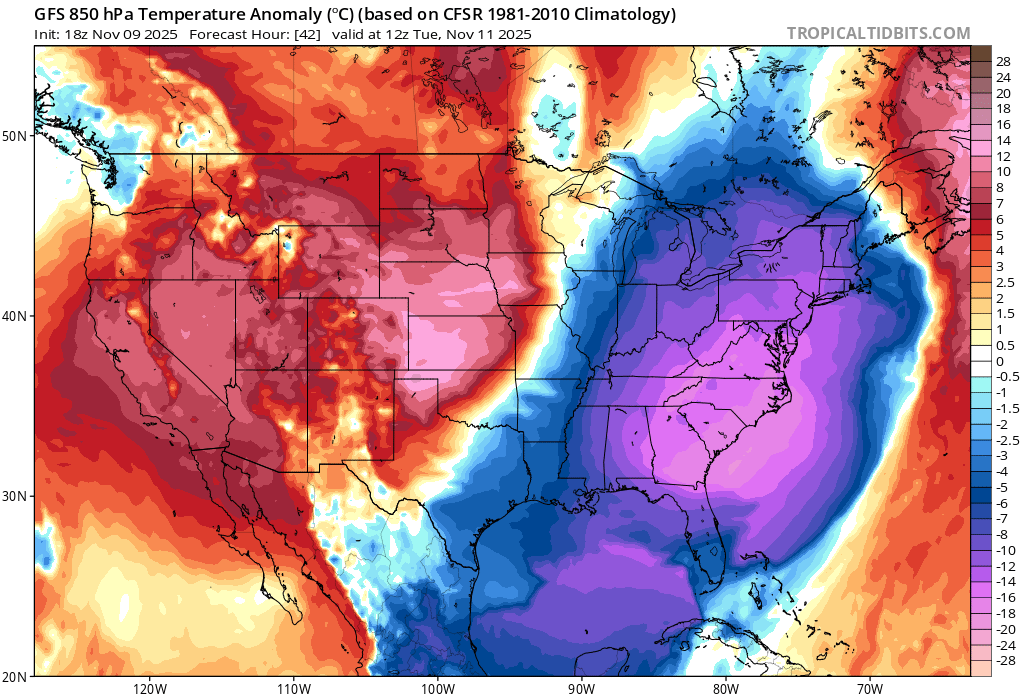
Image: 850 hPa temperature anomalies on Tuesday morning, showing abnormally cold air over the East. Source: TropicalTidbits.com
It’s raining iguanas
As cold-blooded creatures, Florida’s green iguanas (Iguana iguana) need ambient warmth to keep their body temperature regulated, so they often inhabit the high tree canopy to bask in the sunshine. They are native to the tropics of Central and South America but have succeeded in spreading across Florida as an invasive species thanks to the usually warm climate and abundant vegetation. As such, they are sensitive to chilly weather, and become torpid in temperatures below about 45 degrees F.
So, when air temperatures fall below the mid-40s, it affects their physiology, causing their metabolism to become sluggish. Muscles stiffen, and they can lose their grip on tree branches and tumble to the ground, temporarily dazed and immobilized.
Although this can sometimes be fatal, especially during extended cold periods, the iguanas usually recover as temperatures rise, and they can clamber back into the trees.
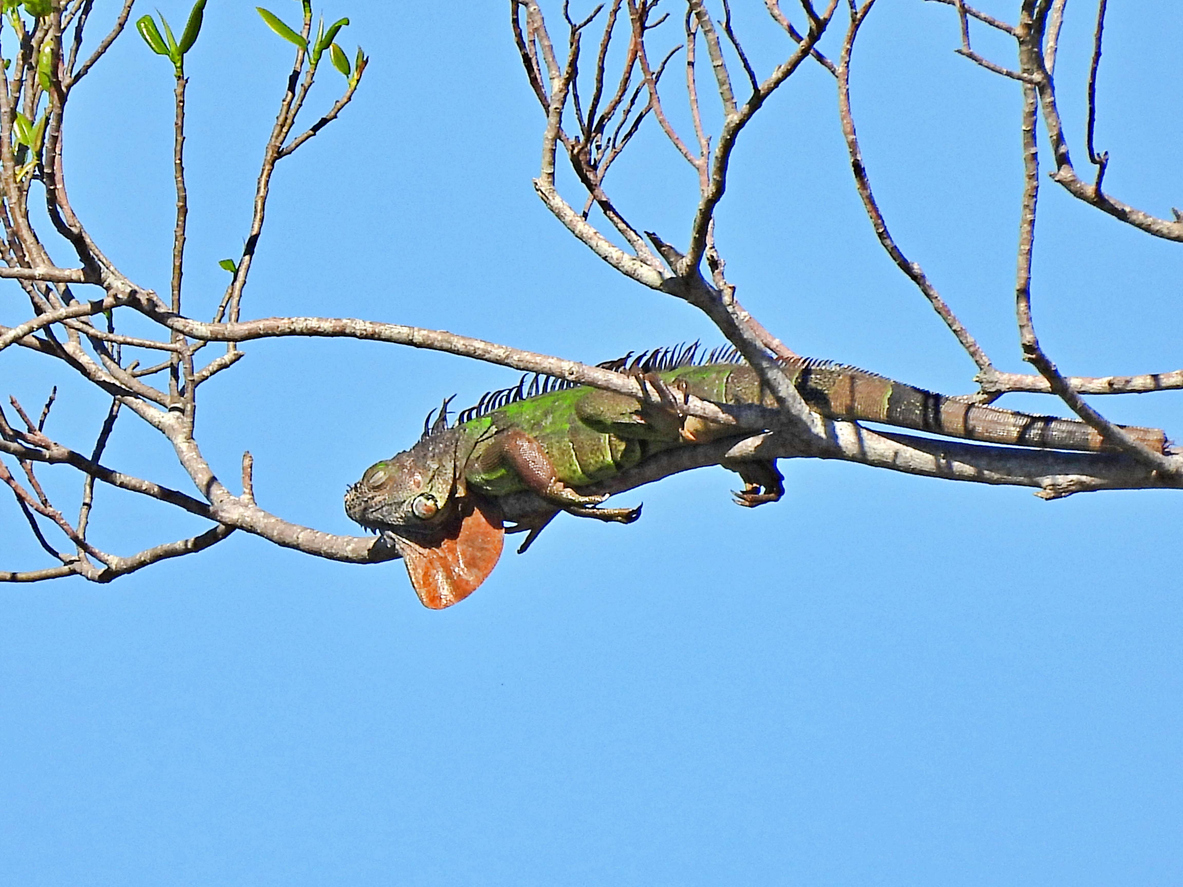
Image: A green iguana enjoying some sun in Florida. Source: iStock / Sandi Smolker
Abnormally cold temperatures can also have consequences for other fauna and flora.
Anoles and fish also experience metabolic slowdown, with warm-water fish like tilapia possibly suffering cold shock, especially in shallow lakes and waterways. Frost can burn the leaves of sensitive crops, while tropical and sub-tropical plants like bougainvillea and hibiscus can wilt. Insects, including mosquitos, can also become less active in cold weather.
Cold snaps are not uncommon in late fall in Florida, but the current polar plunge is rather unusual for this time of year. However, like the iguanas, temperatures should quickly recover during the second half of this week.